
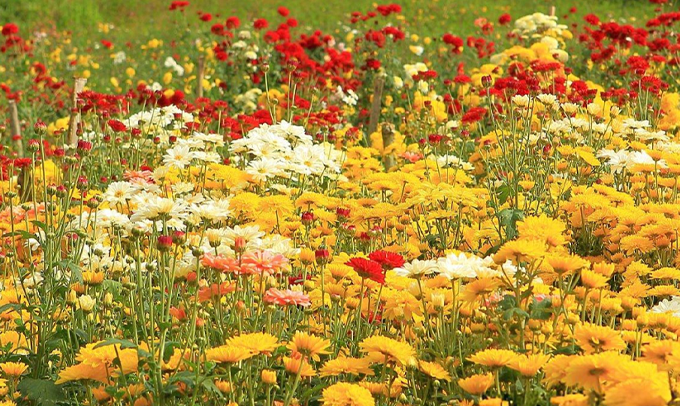
Carnations are undeniably beautiful flowers, yet many people struggle to grow and care for them successfully. Their demanding maintenance makes carnations relatively expensive on the market. Botanically known as Dianthus caryophyllus, this charming flower is often chosen as a gift thanks to its rich symbolism and visually appealing appearance.
Carnations are believed to have originated in the Mediterranean region, although their exact place of origin is difficult to determine. This is largely due to extensive cultivation that has taken place over the past two thousand years. Even so, wild carnations can still be found in several Mediterranean countries, including Croatia, Albania, Italy, Turkey, and Greece.
Ancient Greek and Roman civilizations were the first known societies to cultivate carnations, making them one of the oldest cultivated ornamental plants in the world. During that time, carnations were commonly used in floral garlands for celebrations and as decorative elements in important events.
The name “Dianthus” comes from Ancient Greek, derived from dios, meaning “god,” and anthos, meaning “flower,” which is why carnations are often referred to as “flowers of the gods.” According to legend, the name is linked to the story of Diana, the Goddess of the Hunt, who punished a shepherd boy for disturbing her hunt by gouging out his eyes.
From where the eyes fell, red carnations were said to have grown. Meanwhile, the word “carnation” is believed to be adapted from coronation, corone, or corona-ae, all of which refer to flower garlands or crowns.
In the Mediterranean region, carnations thrive in cool to moderate climates with full sun exposure. They can also adapt to warmer areas as long as they are planted in slightly shaded locations to avoid excessive heat. Generally, the ideal temperature for carnation growth ranges from 18–24 °C during the day and 10–16 °C at night. While they can tolerate higher temperatures, carnations are sensitive to extreme cold or near-freezing conditions.
Carnations typically bloom from late spring to early summer. The plant has a life cycle of around 20 months and can survive for up to 3–4 years under favorable conditions. Carnations are self-fertile plants, as they possess both male and female reproductive organs. However, insects such as moths and butterflies also contribute to the pollination process.
Based on flower size and form, carnations are generally classified into three main types. Large flower carnations produce a single large bloom on each stem. Dwarf flower carnations are smaller and more compact varieties. Spray flower carnations feature several small blooms growing on a single stem, creating a fuller appearance.
Carnations are known to have more than 300 varieties, with an average plant height ranging from 80 to 100 centimeters. Their leaves are slender, measuring up to about 15 centimeters in length, and display colors ranging from grayish green to bluish green.
The flowers typically have a diameter of approximately 3–5 centimeters, with distinctively serrated and fringed petal edges that give them a unique and elegant texture.
Originally, carnations naturally displayed a blend of pink and purple hues. However, through breeding and hybridization, they are now available in a wide array of colors such as yellow, orange, and red.
One striking variety is Grenadin King of the Blacks, which features a deep purplish-red shade that closely resembles black velvet. Interestingly, carnation colors can also be altered creatively using food coloring. In terms of scent, carnations emit a soft fragrance similar to cloves, though it is not overpowering.
Carnations carry different meanings depending on their color.
Because of their versatility and strong emotional symbolism, carnations are widely used in bouquets for various occasions, such as Mother’s Day, graduations, and romantic arrangements. They are capable of expressing deep emotions, making them suitable gifts for friends, family members, or romantic partners.
Carnations can be propagated using seeds or cuttings. Seeds can be obtained from flower growers or purchased in ready-to-plant packages. Essentially, the process of growing carnations is quite simple as long as the media and environment are suitable.
Although they prefer sunlight, carnations cannot tolerate excess water, especially direct rain, as this can trigger rot caused by fungi and bacteria. Therefore, it's best to protect the plants with a plastic roof. Use a pole about 2–2.5 meters high and install a transparent plastic sheet approximately 4 meters wide as a cover.
For planting in the ground, create a bed about two weeks before planting. The soil should be loosened, cleared of stones and plant debris, and then mixed with manure. If the soil pH is too acidic, add a sufficient amount of lime. Afterward, dig small planting holes approximately 20 x 20 cm apart.
If planting in a pot, choose a pot with a diameter of at least 35 cm. The pot can be cleaned first with a fungicide solution, then filled with a mixture of soil, sand, and compost in equal proportions before use.
Carnation flowers offer a wide range of benefits. They are commonly used as home decor or as decorative elements in fashion and accessories. In addition, carnations are widely utilized in beauty products, such as perfumes, thanks to their soft and pleasant fragrance.
The versatility of carnations is closely linked to their deep symbolism. Beautiful in appearance and rich in meaning, it is no surprise that carnations are often chosen for bouquets to celebrate various special occasions.
You can order carnation bouquets from Athaya Florist. We provide a wide selection of flowers with elegant and thoughtfully crafted designs. Customers may choose custom bouquet designs or select arrangements created by the Athaya team.
We also offer carnation bouquets combined with roses, lilies, daffodils, or any other flowers you prefer. Place your flower order today. Athaya Florist is committed to serving you with care and dedication. With competitive pricing and quality arrangements, you can trust us to meet all your floral needs.
