
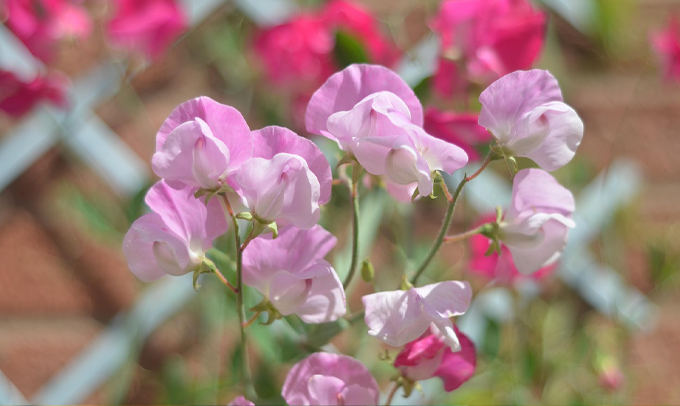
Sweet Pea flower (Lathyrus odoratus) is widely admired for its charming appearance, delicate petals, and sweet fragrance. Many people grow Sweet Peas mainly for two reasons: to enjoy their pleasant scent and to appreciate their attractive, colorful blooms. Beyond its beauty, Sweet Pea also carries a rich history and deep symbolic meaning that make it a meaningful flower for various occasions.
Sweet Pea belongs to the genus Lathyrus and the Fabaceae family. The word Lathyrus comes from Greek, meaning pea or pulse, while odoratus is a Latin word that means fragrant. The name “Sweet Pea” is believed to have been popularized by the poet John Keats (1795–1821).
This flower is native to Sicily in southern Italy and the Aegean Islands, although some sources believe it may have originated from Sri Lanka. According to legend, in the 17th century, a Franciscan monk discovered Sweet Pea growing wild while walking through the hills. Fascinated by its beauty and fragrance, he brought the plant home and began cultivating it.
Sweet Pea later gained scientific importance through the work of Gregor Mendel, a Sicilian monk who studied the basic principles of genetics using this plant. He observed seven characteristics, including plant height, seed shape, pod color, and flower color.
Another Sicilian monk, Franciscus Cupani, helped spread Sweet Pea across Europe by sending its seeds to plant collectors and botanical institutions, including those in England.
In the 19th century, Sweet Pea became extremely popular thanks to Henry Eckford, a Scottish horticulturist who successfully improved flower size and expanded color varieties. His work was continued by Silas Cole and William Unwin, who developed larger, ruffled varieties such as the famous “Countess Spencer.”
In the modern era, Sweet Pea varieties continue to evolve, including grandiflora types, miniature forms, and flowers bred to bloom in specific seasons.
Sweet Pea thrives in cool, maritime climates and mountainous regions, reflecting the geographical conditions of its native Sicily. It is commonly grown as an annual plant, meaning it completes its life cycle in one season. Perennial Sweet Pea varieties exist but usually have a weaker fragrance.
In warm climates, Sweet Pea blooms during winter and early spring, while in colder regions it is often started from seeds in greenhouses and blooms in summer. This plant prefers cool temperatures and sufficient sunlight but does not tolerate extreme heat or freezing conditions. The ideal temperature is around 21 °C during the day and no lower than 10 °C at night.
Sweet Pea is a climbing plant that can grow up to 1–2 meters tall with proper support. Its leaves are pinnate, and the tendrils help the plant cling to fences, walls, or other plants. The flower structure is unique, consisting of a large upright petal, two wing-like side petals, and two lower petals, often described as resembling a butterfly or a small boat.
In the wild, Sweet Pea flowers are usually purple. Through cultivation, however, the flower now appears in almost every color except true yellow. Popular colors include blue, lavender, red, pink, white, cream, and multicolored patterns.
One of Sweet Pea’s most distinctive features is its sweet aroma. Older varieties such as Grandiflora and Spencer types are known for their strong fragrance, while many modern hybrids are less scented. The fragrance intensity changes throughout the day and is best enjoyed on dry, sunny days.
Sweet Pea is widely known as the birth flower of April and is closely associated with themes of gratitude, farewell, and appreciation. Because of this meaning, Sweet Pea is often given at moments of transition, such as graduations, goodbyes, or the end of a meaningful chapter in life.
The meaning of Sweet Pea can also vary depending on its color:
Because of these varied meanings, Sweet Pea is a versatile flower that can be used to express many feelings, from gratitude and friendship to love and admiration.
Planting Sweet Pea is a rewarding experience, especially for those who enjoy colorful and fragrant flowers. With proper preparation and care, Sweet Pea can grow well and produce beautiful blooms within a short time.
The ideal time to plant Sweet Pea is in early spring or late winter. Choose an open area in your garden or yard that receives plenty of sunlight. Sweet Pea prefers cool temperatures and fresh air, so avoid locations that are too hot or poorly ventilated.
To improve germination, Sweet Pea seeds should be soaked in water overnight. Select seeds that swell after soaking, as these are more likely to sprout successfully. Lightly scratching or nicking the seed coat can also help speed up the germination process.
Prepare seed trays or containers filled with high-quality soil. Plant the seeds at a depth of about 1–2.5 cm, with a spacing of approximately 7.5 cm between seeds. Water gently, then cover the container with plastic to retain moisture. After about one week, remove the cover once sprouts appear.
Once the seedlings develop leaves, they are ready to be transplanted. Prepare moist soil mixed with compost to provide sufficient nutrients. If planting directly in the garden, space the plants about 12.5 cm apart to allow healthy growth.
Sweet Pea needs regular watering to keep the soil moist, but avoid waterlogging. Watering is best done in the morning. The plant grows best in cool conditions with adequate sunlight, but it does not tolerate extreme heat or frost.
If you wish to present the gentle beauty of Sweet Pea in an elegant floral arrangement, Athaya is ready to help you create a meaningful gift. Using fresh, carefully selected flowers, each arrangement is designed to highlight the softness, color harmony, and symbolism of Sweet Pea.
Athaya offers a wide selection of bouquets and bloom boxes suitable for birthdays, weddings, graduations, and farewell moments. With professional craftsmanship and thoughtful service, Athaya helps you express gratitude, love, and appreciation through flowers that leave a lasting impression. Do not hesitate to contact our team and find the perfect floral arrangement for your special occasion.
