
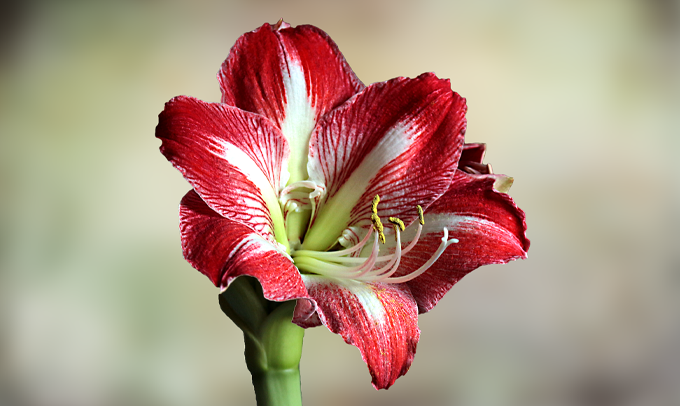
Amaryllis (Amaryllis spp.) is a popular ornamental plant admired for its large, striking blooms and tall, elegant stems. It is commonly grown in gardens, yards, or pots, and its long stalks make it an excellent choice as a cut flower. Beyond its visual beauty, amaryllis carries rich symbolism, fascinating history, and a legendary story that adds emotional depth to this stunning bloom.
Amaryllis originates from warm and sunny regions of South America, particularly Brazil and Peru. The plant thrives in areas with abundant sunlight and well-drained soil. Over time, amaryllis spread to many parts of the world due to its strong adaptability and ease of cultivation. Today, it is widely grown in tropical and subtropical countries, including Indonesia.
The name Amaryllis comes from Greek mythology and means “to sparkle” or “to shine,” a fitting description for a flower with such bold colors and dramatic presence. Historically, amaryllis attracted the attention of European gardeners in the early 19th century. Although it was often confused with Hippeastrum, the symbolic meaning of amaryllis has remained consistent for centuries.
Behind its elegant name, amaryllis hides a tragic love story. According to legend, a fairy named Amaryllis fell deeply in love with a handsome shepherd named Alteo, who possessed the beauty of Apollo and the strength of Hercules. Unfortunately, her love was unreturned.
Desperate to win his heart, Amaryllis sought advice from the Oracle of Delphi. Following the oracle’s instructions, she appeared before Alteo’s house wearing a white gown and pierced her heart with a golden arrow every day. On the thirtieth day, Alteo finally opened his door and was stunned to see bright red flowers blooming along the path. It is said that these flowers grew from Amaryllis’s blood, which is why red amaryllis is the most iconic variety today.
Amaryllis grows best in warm climates with plenty of sunlight. It prefers temperatures ranging from 18–27 °C and does not tolerate excessive cold or frost. The plant thrives in loose, fertile, and well-drained soil, making it suitable for both outdoor gardens and indoor containers.
One of the unique features of amaryllis is its growth cycle. The bulb can “remember” its blooming cycle, allowing the plant to flower indoors during winter. After blooming, amaryllis requires a dormant period to restore energy before flowering again in the next season.
Amaryllis is known for its large, trumpet-shaped flowers that resemble stars or bells. Each stalk can produce several blooms at once, standing tall above long, strap-shaped green leaves. Because of its upright growth and oversized flowers, amaryllis naturally becomes the center of attention wherever it is placed.
The flower comes in a wide variety of colors, including red, white, pink, purple, orange, yellow, and bi-color combinations such as white with pink stripes. Popular varieties include deep red (carance), soft pink and white (apple blossom), and coral tones (minerva).
In addition to its beauty, amaryllis produces essential oils used in perfumes and aromatherapy. Its scent is known to provide a calming effect while also refreshing the mind. However, it is important to note that all parts of the plant are toxic if consumed and should be kept away from children and pets.
Amaryllis symbolizes pride, determination, strength, and captivating beauty. Its tall stem and large blooms represent confidence and perseverance, making it a meaningful gift for someone starting a new journey or overcoming challenges.
In Greek symbolism, amaryllis represents magnificence and brilliance. For men, the flower signifies strength and confidence, while for women it symbolizes beauty and charm. The star-like and trumpet-shaped flowers also represent achievement and personal pride.
In some cultures, amaryllis is associated with courage and resilience. It is often given to people who are recovering from illness or who have successfully passed through difficult periods in life.
These varied meanings make amaryllis suitable for many occasions, from celebrations to moments of reflection.
Amaryllis can be grown easily, making it ideal for both beginners and experienced gardeners. Although it can be grown from seeds, planting from bulbs is the most common and effective method.
Growing amaryllis from seeds takes patience, as the plant may need 3–5 years before producing its first bloom. Planting from bulbs is faster and more reliable, allowing the plant to flower within 6–8 weeks. For this reason, most gardeners prefer bulb planting.
Amaryllis can be planted year-round in warm climates. Choose a location with bright, indirect sunlight or full sun. For indoor planting, place the pot near a window with good light exposure.
Amaryllis requires minimal care once planted.
Water sparingly until new growth appears, then increase watering gradually. The soil should be moist but not waterlogged. Overwatering can cause bulb rot.
Provide sufficient sunlight to encourage strong growth. Fertilize every 2–3 weeks using liquid fertilizer during the growing period.
After flowering, remove spent blooms but keep the leaves intact so the plant can store energy. Reduce watering gradually and allow the plant to rest for several months. With proper care, amaryllis can bloom annually for 15–20 years or more.
If you wish to present the bold elegance of amaryllis in a luxurious floral arrangement, Athaya is ready to assist you. Each arrangement is crafted using fresh, high-quality flowers to highlight the strength, beauty, and symbolism of amaryllis.
Athaya offers a wide range of bouquets and floral boxes suitable for celebrations, congratulations, recovery wishes, or meaningful gifts. With professional craftsmanship and attentive service, Athaya helps you express pride, love, and appreciation through unforgettable floral arrangements. Contact our team for a personalized arrangement.
