
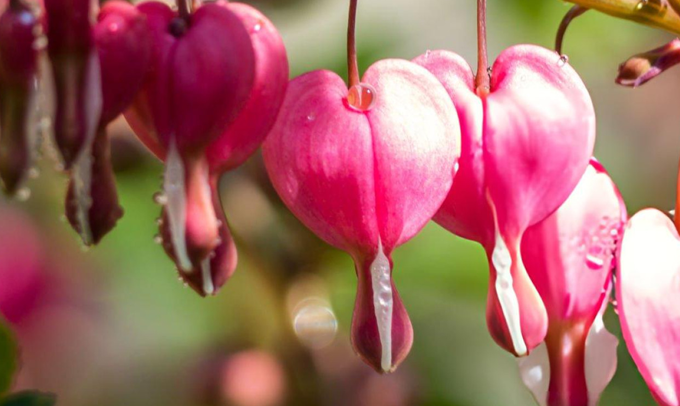
The bleeding heart flower, also known as the fringed bleeding heart or Turkey corn, has become one of the most favorite flowers among gardeners. Its beauty is very unique with its simple heart-shaped blooms. This flower holds a special place in many cultures, with lots of folklore circling around. There are a lot of tales about love, even mystical stories, making it more sacred and adorable for everyone who understands its meaning.
The bleeding heart flower has a unique addition in the garden during the spring season. This is not a surprising thing if the flower is usually named as the springtime flower, even though it has its full bloom during summer. If you are planning to plant this flower, it is always a great idea to try.
The bleeding heart flower is native to Siberia, Japan, and Northern China. This is also naturally found in North America, which is mostly spread in woodlands in the spine of the Appalachian Mountains. It grows naturally from Southwestern Pennsylvania to North Carolina.
The flower with the Latin name, Lamprocapnos spectabilis, is a member of the Papaveraceae family, of Paparevaraceae which, due to its interesting colors and shape, attracts butterflies and hummingbirds. The name of "bleeding heart" itself comes from its appearance, which forms a heart shape, and its inner petals stick out, making it look like a bleeding heart.
The bleeding heart is found in the woodlands and forests. It typically thrives well in soil with consistent moisture, such as near the hillsides. Sometimes, you will find the flower grows well around the shaded areas, making it reasonable to grow around a forest too, as it has dappled sunlight or partial shade.
As it is native to the colder areas, the flower prefers colder temperatures around 15–21°C. If you are living in a warmer area, it is wise to maintain the climate and its natural habitat. Besides, this flower is also sensitive to dryness. During drier climates, the bleeding heart flower will go dormant, such as during summer.
The shape of the bleeding heart flower is phenomenal, with its heart-shaped petals, with the red streak coming out looking like a bleeding heart.
This flower also comes in multiple colors, such as pink, white, and red. Not as much as other popular flowers when it comes to color, but that is what makes the flower stand out due to its unique shape.
Speaking about fragrance, the flower almost has no fragrance. It is a very subtle, fruity scent that is almost unnoticeable to the human nose. Certain varieties, such as "Ivory Hearts" have more fragrance, but it is not very noticeable.
Due to the unique shape of bleeding heart flowers, this plant is often associated with heartbreak, love, romance, and passion. Besides, this flower also resembles deep compassion, empathy, and sensitivity, which means someone who gets this flower will read a message that they are encouraged to be more open with their expression and feelings.
When it comes to meaning, the flower, of course, has specific meanings depending on the colors and the culture in general. However, generally, you can guess the meaning of the bleeding heart color by the following description:
In general, the bleeding heart flower is planted from nursery seedlings. However, you can propagate the flower starting from the seeds, stem cutting, and also clump division.
If you want to start from the seeds, this takes a little patience to grow it properly. You begin the seeding stage indoors and then place it in the pot of soil. Next, you can put the pot in the plastic bag and place it in the freezer for around 6 weeks. After that, you can remove the pot and introduce the plant to a warmer environment. In this case, the sunlight exposure will help the seeds to sprout.
Remember that the bleeding heart flower is able to self-seed, even though it is not invasive. Therefore, you don't have to put more effort later if you want to multiply your flowers in the garden because, in general, it can do it by itself.
When winter comes, the bleeding heart flower will go dormant. However, the root will survive until the winter is over. During the winter season, protect the roots to retain moisture. You can add 2 inches of mulch at the top of the stems. When spring comes, you can remove the mulch so it grows back.
Talking about growing a flower, of course, pests and diseases are common, including bleeding heart disease. In general, the bleeding heart is prone to aphids, slugs, snails, and also scales. To prevent this issue, you can use insecticidal soap or neem oil.
Meanwhile, for the fungal disease, the bleeding flower is prone to powdery mildew and leaf spot. However, you don't have to worry about this, as this can be treated using a fungicide. When you notice the plant goes black with foul-smelling, this means the flower is rotting, and it can infect the other plants. Therefore, it is better to dispose of this flower to prevent the spread. Besides, don't forget to sterilize the container if your plant is planted there, and also don't forget to throw out the soil.
For those who love the bleeding flower must love with the flower arrangements. Some of you must need a quick flower arrangement as a surprise gift, and most of the time, people don’t have the time to make one. For this matter, Athaya Florist has come to help you create the most beautiful flower arrangement that you can customize as you like, from the designs, wrappers, colors, message, and even the budget. Our team will make it easier, and delivery is always on time, so you don’t have to worry! For more information, contact our team!
